 editor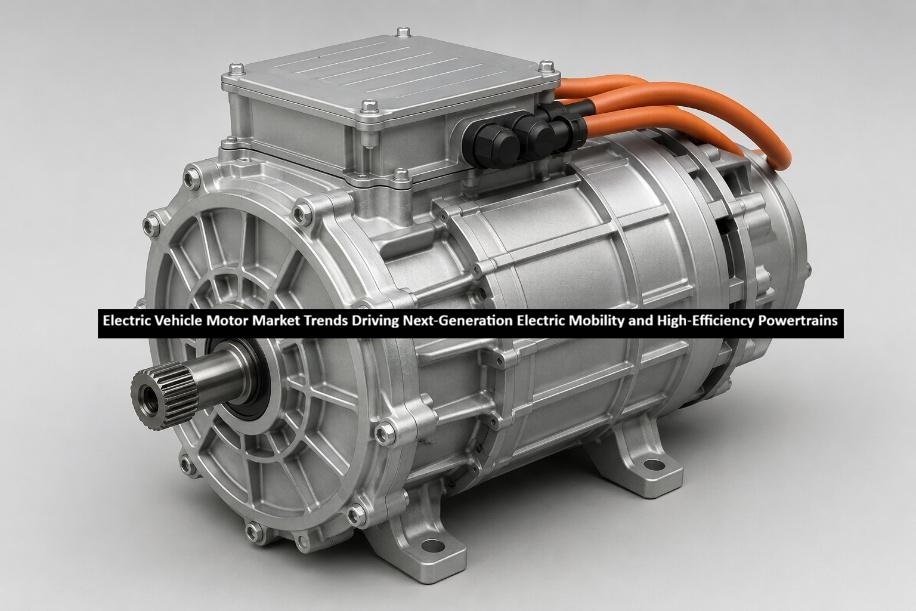
Electric vehicle systems have experienced rapid technological development because of the worldwide transition toward electric transportation systems. The electric vehicle motor market serves as the main driving force behind this development, which maintains its fast-paced technological progress because of rising demands for improved efficiency, smaller designs, longer driving distances and eco-friendly production methods. The automotive industry now focuses on electric motors because government emission standards have tightened and automotive manufacturers have increased their efforts to produce electric vehicles.
Current electric powertrains use battery capacity as their only measurement for power system efficiency. The performance of vehicles now depends on motor efficiency, thermal management, power density and their integration with electronic control systems. The introduction of axial-flux motors, silicon carbide-based inverters, and integrated electric drive units and rare-earth-free motor technologies has created new possibilities for electric mobility.
Read: Your Direct To Sorts Of Pontoons, Yachts, Ships & Vessels
Growing Importance of High-Efficiency Electric Motors
Electric motors provide three essential functions for vehicles because they control acceleration and power consumption and establish drivetrain durability. Manufacturers are increasing efficiency requirements while they strive to decrease production expenses and material needs for electric vehicle production which has become a global standard. The electric vehicle motor market now prioritizes design elements which include high power density, low energy waste, light motor designs and better thermal functioning and more effective regenerative braking and minimal use of rare-earth materials.
Advanced motor technologies and optimized motor systems allow energy consumption reductions between 20% and 30% for various applications. The automotive industry requires this advancement because it needs to decrease energy usage while increasing operational efficiency. The market for Permanent Magnet Synchronous Motors (PMSMs) exists because they provide superior efficiency and torque density, but induction motors and magnet-free solutions are becoming popular especially for commercial vehicles which require high durability and low operational costs.
Rise of Integrated Electric Drive Units
The electric vehicle motor market has its greatest progress through the increasing market presence of integrated electric drive units (EDUs). The systems operate as a unified compact system which combines electric motor components with transmission and inverter systems.
This integration delivers several advantages:
- Reduced vehicle weight
- Lower wiring complexity
- Better packaging efficiency
- Improved thermal management
- Faster manufacturing and assembly
- Increased drivetrain efficiency
Integrated “3-in-1” and “4-in-1” electric drive systems have become standard equipment for upcoming electric vehicle platforms. The compact design of these systems enables automotive manufacturers to create more interior space while achieving better energy performance and extended vehicle range.
Axial-Flux Motors Reshaping EV Design
The electric vehicle motor industry is experiencing a major change because of axial-flux motors which have become one of its most important innovations. The axial-flux design system provides higher power density than traditional radial-flux motors through its ability to deliver power in a more compact and lightweight configuration.
These motors are increasingly being explored for:
- High-performance electric vehicles
- Premium EV platforms
- Motorsport applications
- In-wheel drive systems
- Lightweight mobility solutions
Axial-flux motors have reached their highest performance levels because recent technical improvements enable them to produce high torque and efficiency results from their smaller design. The compact design of axial-flux technology has attracted substantial investment from multiple automotive manufacturers and technology companies who use it to improve vehicle performance while minimizing drivetrain weight. The motor’s smaller size and weight enable vehicle designers to create more flexible designs which result in bigger cabin areas and better airflow while achieving higher energy efficiency and needing less battery power.
The existing benefits face multiple obstacles because of difficulties related to manufacturing technologies and thermal control systems and cost-efficient solutions for extensive operations. The axial-flux motor technology faces present challenges, yet research efforts and commercial development activities predict its future growth into mainstream usage within the next ten years according to current automotive industry requirements for efficient lightweight electric drive systems.
Silicon Carbide Technology Accelerating Efficiency Gains
The electric vehicle motor market grows because electric vehicle demand requires power systems which use silicon carbide technology for traction inverters and motor control systems. Silicon carbide semiconductors provide several operational advantages compared to traditional silicon-based components which are:
- Faster switching speeds
- Reduced energy losses
- Higher thermal conductivity
- Improved fast-charging compatibility
- Greater efficiency at higher voltages
The electric vehicle motor market expands because of increasing electric vehicle demand which now uses silicon carbide power electronics for its traction inverters and motor control systems.
Shift Toward Rare-Earth-Free Motor Technologies
The industry is investigating alternative motor technologies because of supply chain problems and geopolitical risks related to rare-earth materials. The demand for rare-earth magnets which include neodymium reaches essential levels for numerous high-performance electric motors. The automotive industry and its suppliers have started to develop motor systems which require no rare-earth materials or only small quantities of these materials. This development arose because the market prices and rare-earth material supplies have changed.
Several approaches are currently under development:
- Magnet-free synchronous motors
- Advanced induction motors
- Switched reluctance motors
- Ferrite-based magnetic systems
Some automotive companies are actively forming partnerships because they need to develop supplier diversification methods which will help them reduce their future electric vehicle programs need for rare-earth elements.
Thermal Management Becoming a Critical Priority
Modern electric motors experience their highest operational temperatures during their use in performance-driven and business-oriented environments. Manufacturers are developing solutions to these problems through their product introductions.
- Oil-cooled motor systems
- Advanced liquid cooling channels
- AI-driven thermal control systems
- Integrated cooling architectures
- Enhanced heat-resistant materials
Motor systems achieve extended operational capacity through effective thermal control which decreases equipment deterioration while extending their operational lifetime. The cooling systems used in electric drive units help modern EV platforms to achieve better packaging efficiency while decreasing the number of parts required.
Expansion of In-Wheel and Dual-Rotor Technologies
The electric vehicle motor market is currently testing new motor designs through its research work on in-wheel motors and dual-rotor systems, which scientists believe will create simpler vehicle systems and improve both vehicle performance and energy consumption. The dual-rotor system design exists to create stronger torque production while using fewer materials, which makes it a viable solution for achieving higher motor performance. In-wheel motors enable vehicle designs to remove all standard drivetrain parts, which results in a design that requires less space and weighs less.
The adoption of in-wheel motors has been limited because they face two main obstacles which include their extra weight and their performance limitations. The industry shows strong interest in special mobility systems and high-efficiency vehicle designs because researchers continue to study these two subjects. The new motor designs will change how vehicles are built because they enable multiple design options and accurate torque management, which will lead to more effective and advanced electric vehicles.
Future Outlook of the Electric Vehicle Motor Market
The future of the electric vehicle motor market will likely be shaped by the convergence of efficiency optimization, lightweight engineering, advanced materials, and intelligent power electronics. The industry will experience long-term trends which include integrated e-drive systems becoming common and axial-flux motor commercialization expanding and silicon carbide semiconductors gaining more popularity. The developments target three main objectives which involve improving vehicle performance and energy efficiency while decreasing production expenses.
The world experiences primary energy intensity improvements which reach approximately 1.8%, because electrification and energy-efficient transportation technologies introduce new ways to conserve energy. The efficiency improvements that manufacturers achieve through sustainable magnet-free motors and AI-driven motor control systems will help them reach their sustainability targets. The ongoing development of 800-volt architectures will enhance worldwide energy efficiency. The electric vehicle motor market will drive the development of sustainable transportation systems which will use electric motors to power all types of vehicles from passenger cars to commercial trucks and industrial equipment.
According to Pristine Market Insights, electrification will extend its reach into commercial transport sectors, which include logistics and industrial machinery operations and advanced mobility systems, while electric motor technology will drive sustainable transportation progress. The future of Electric Vehicle Motor Market requires battery improvements together with motor technologies that are efficient, smart and compact to meet the needs of changing global transportation requirements.